
JAPAN'S Shrinking Regions in the 21st Century
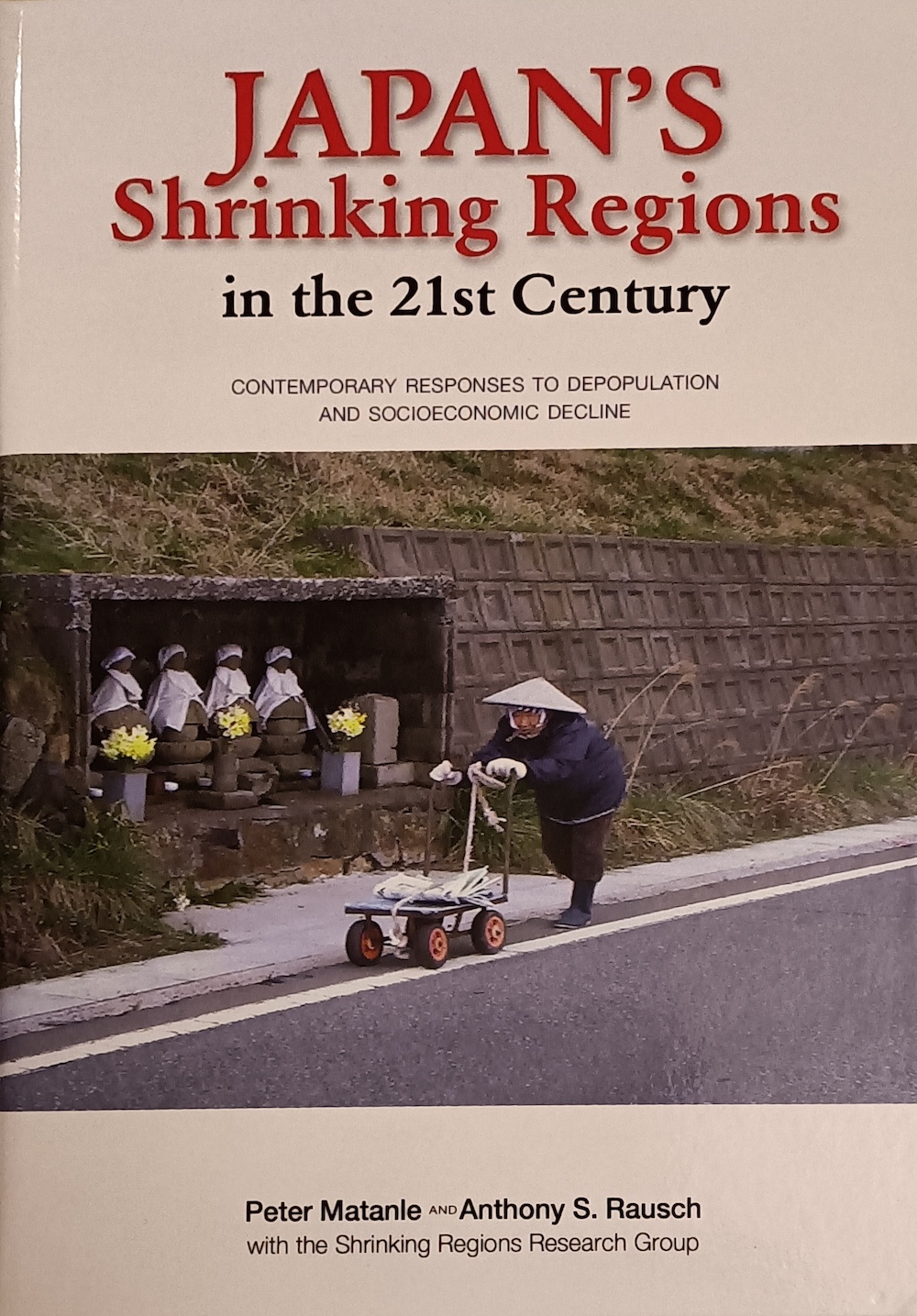
"Rich in documentary information and theoretical background, revealing, disturbing, prophetic—this is one of the most important books to be written on Japan in recent years."
- Alex Kerr,
author of Lost Japan (Winner of the 1994 Shincho Gaugei Prize for Distinguished Scholarship) and Dogs and Demons: Tales from the Dark Side of Japan
"An ambitious and tremendously important contribution to the study of contemporary Japanese society ... one of the best books on contemporary Japan produced in the past 30 years and represents a must read for scholars of Japan, demographers, and anyone interested in processes of population change that will affect many parts of the world in the future."
- Prof. John W. Traphagan, University of Texas at Austin
author of Taming Oblivion: Aging Bodies and the Fear of Senility in Japan and The Practice of Concern: Ritual, Well-Being, and Aging in Rural Japan; and coeditor of Demographic Change and the Family in Japan's Aging Society
"This excellent book presents many case studies and abundant evidence for a new regional dynamism in Japan. It provides hints for all countries and regions attempting to overcome problems associated with ageing and depopulation and to realize stability and sustainability for their societies."
- Prof. Yuji Genda, Institute of Social Science, University of Tokyo,
and author of A Nagging Sense of Job Insecurity: The New Reality Facing Japanese Youth and Kibögaku no Tsukurikata
"This timely volume offers an in-depth view of demographic shrinkage in those regions where it is most rapid and pronounced ... it goes beyond identifying the impacts and problems of shrinkage for Japan's regions to making policy recommendations for revitalisation and revealing hidden opportunities to develop a new, more environment-friendly way of life that is of potential interest for other advanced countries facing regional shrinkage."
- Prof. Florian Coulmas, Director, German Institute for Japanese Studies, Tokyo;
author of Imploding Populations in Japan and Germany and Population Decline and Ageing in Japan: The Social Consequences; and coeditor of The Demographic Challenge: A Handbook About Japan
COP26 und Luxembourg
COP26 (Oktober 31 – November 12, 2021)
Was ist, wenn der Klimawandel bereits den Punkt erreicht hat, an dem es kein Zurück mehr gibt? Ein Kipppunkt, der zum unausweichlichen Systemkollaps führt, oder, mit anderen Worten, der unaufhaltsame Ökozid? Da wir uns nicht mehr auf das Klima verlassen können, das wir ziemlich stark geschädigt haben, und auch nicht auf den Boden, den wir so missbraucht haben, dass er verarmt und chemisch verseucht ist, dass er nicht mehr genutzt werden kann, was bleibt dann noch für die Landwirtschaft und die daraus resultierende Wirtschaft zu hoffen? Denn was können wir ohne gesunde Ernten in die Verkaufsregale stellen? Aber das sind die vorhersehbaren Folgen der jetzt stattfindenden Veränderung, die wir mit all unserem Geld nicht vermeiden können…[1]
Am 9. August 2021 veröffentlichte der Zwischenstaatliche Ausschuss für Klimaänderungen (IPCC) seine bisher schärfste Warnung. [2]. Er warnt vor großen und unvermeidlichen Klima- und Umweltveränderungen. Darüber hinaus werden im November dieses Jahres in Glasgow unter der Schirmherrschaft der Vereinten Nationen im Rahmen der COP26 wichtige Verhandlungen stattfinden, bei denen alle Fragen (sozialer, wirtschaftlicher, wissenschaftlicher und anderer Art) erörtert werden, die mit dem Klimaproblem fast aller Staaten zusammenhängen. Es wird erwartet, dass jedes der 195 teilnehmenden Länder seine konkreten Pläne und tatsächlichen Verpflichtungen zur drastischen Reduzierung seiner Treibhausgasemissionen vorstellt. Da der IPCC jedoch bereits deutlich davor warnt, dass eine Begrenzung der Erwärmung auf etwa 1,5°C oder sogar 2°C unerreichbar ist, wenn wir keine drastischen Anstrengungen unternehmen, könnte man sich fragen, ob die COP26 überhaupt sinnvoll ist. Die patentierte Apathie der politischen "Mächtigen", ihre lauwarme Unterstützung (wenn nicht sogar eine kaum verhüllte Feindseligkeit) für Bürgerinitiativen, die in die richtige Richtung gehen, und der Spielraum, der dem Druck der Lobbys (nicht nur der Industrie) eingeräumt wird, machen diese "COP"-Veranstaltungen bestenfalls zu Maskeraden und schlimmstenfalls zu einer schönen Schweinerei auf Kosten der Welt.
COP26 et le Luxembourg
COP26 (Octobre 31 – Novembre 12, 2021)
Et si le changement climatique rencontrait déjà son point de non-retour ? Un basculement menant à l’inéluctable faillite systémique ou, autrement dit, l’inexorable planéticide environnemental ? Ne pouvant plus nous fier au climat que nous avons passablement détraqué, ni aux terres dont nous avons abusées à l’extrême, au point de les voir si appauvries et chimiquement polluées qu’elles en sont inexploitables, que reste-il à espérer pour l’agriculture et l’économie qui en découle ? car sans culture saine, que mettre à l’étalage des magasins ? des productions agro-alimentaires industrielles gavées d’OGM et de pétrochimie ? en voilà un joli futur qui se dessine dans nos assiettes et celles des générations à venir ! Ce sont pourtant là des conséquences prévisibles du basculement qui s’opère maintenant, des conséquences que tout notre argent ne nous permettra pas d’éviter…[1]
Le 9 août 2021, le Groupe d'experts Intergouvernemental sur l'Évolution du Climat (GIEC) a publié son avertissement le plus sévère [2]. Il annonce des changements climatiques et environnementaux majeurs et inévitables. Par ailleurs, en novembre prochain à Glasgow, d'importantes négociations se tiendront sous l’égide des Nations Unies, dans le cadre de la COP26, pour discuter de toutes les matières (sociales, économiques, scientifiques et autres) liées au casse-tête climatique de presque tous les États. Chacune des 195 nations participantes doit y présenter ses plans concrets et de vrais engagements pour réduire fortement ses émissions de gaz à effet de serre. Toutefois, alors que le GIEC nous prévient d’ores et déjà clairement que la limitation du réchauffement aux alentours de 1,5°C, ou même à 2°C, sera hors de portée à moins d’efforts drastiques, on peut s’interroger sur l’utilité de l’exercice COP26, L’apathie patentée du « pouvoir » politique, son soutien mitigé (quand ce n’est pas un antagonisme à peine voilé) envers les initiatives citoyennes allant dans le bon sens et la place laissée aux pressions exercées par les lobbies (pas uniquement industriels) font de ces événements « COP » au mieux des mascarades et au pire de beaux gâchis sur le dos du monde.
Inequality and Precarity in Japan: The Sorry Achievements of Abenomics
By Sachie Mizohata, translation from Japanese and introduction
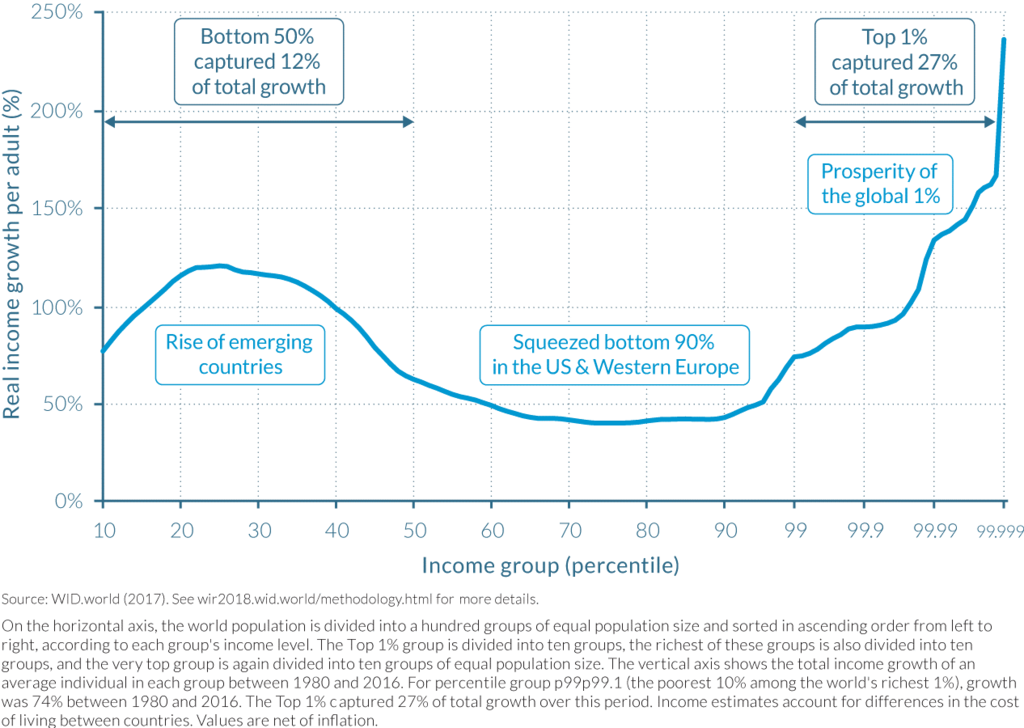
Japan was known as the home of a strong middle-class in the affluent 1980s, the fruits of its prosperous economy distributed more equitably than in many comparable high-income countries. Yet strictly speaking, contrary to popular perception, Japan was not that “egalitarian.” However, public credence was set and the Wall Street Journal (1989) to tellingly (if hyperbolically) characterize this secure society with impressive equality and principled values as “the only communist nation that works.”1 Then, sea changes followed. This once “egalitarian” society is now widely (not least in Japan) recognized as a kakusa shakai (unequal society) in which income and wealth have become more unequally distributed than in many advanced economies.2 While widening wealth gap between rich and poor is a global trend as shown in the graph by Thomas Piketty and his co-researchers (Figure 1.1), in the case of Japan, in recent decades this has been accompanied by economic stagnation, rising levels of poverty, precarity, and public debt grafted on top of population aging.3 Against these backdrops, the second Abe Shinzō government started its economic policies, proclaimed as Abenomics, in an effort “to sustainably revive the Japanese economy” that was promised to trickle-down to all.4 Five years on, evaluations have taken place on the Abe program centered on hyper monetary easing, fiscal stimuli, and structural reform.
奥泉栄三郎さん(1940-2013) 「桃太郎と日本文化」
「それにしても、あなたは年寄りの友達が多いねぇ。僕も含めてね」なにを話していたかは、覚えてないが。そう言って、奥泉さんは明るくはじけるように笑った。
彼がいなくなれば、友人関係はそれで終わってしまうものだと悲しかった。ところが、病気になった彼に代わって、妻の圭子さんという友人をあらたに得た。奥泉さんの人生は、この賢くやさしい女性にささえられてきたのだと知るようになった。
その圭子さんが、この春、彼の残した「桃太郎と日本文化」という文書を送ってくれた。
室町時代から語りつがれる民話が、軍国主義を正当化する童話として、GHQに禁じられた時期があったという。「赤鬼・青鬼」は「鬼畜米英」で、「鬼ヶ島」を「真珠湾」にたとえたのだから、ムリもない。ピーチ・ボーイの改変史を知ったのは、近年ジョン・ダワー氏の本を読んでからである。
奥泉さんも、随分まえから桃太郎をみていた。うれしいのと同時に、これは年上の友人からの警告だろうか、と思ったりもする。
つまり「桃太郎人気にご用心」ということだろうか?
奥泉さんの記事「桃太郎と日本文化」は、シカゴの日系新聞 Mid America Guide に1996年、2月~8月にかけて(7月を除いて)、6回にわたり連載された。文書をクリックすると、拡大します。みなさんにも、ぜひ読んでいただきたい(私のお気に入りは第3回)。
2か所ほど、訂正箇所があるように思う。
第3回左 松本平吉 → 松木平吉
第4回左 燕石雑誌 → 燕石雑志
Nippon Kaigi: Empire, Contradiction, and Japan’s Future
By Sachie Mizohata
Introduction
Nippon Kaigi (NK, the “Japan Conference”) is Japan’s largest and most powerful conservative right-wing organization, whose members include current Prime Minister Abe Shinzō and most of his Cabinet.1 This nationalist non-party political group was relatively unknown until recently. A surge in publication and media attention of late, however, has made this arcane society suddenly visible, particularly in regard to its influence on politics, nationalist agenda, and revisionist causes. Many recent publications2 associate Nippon Kaigi with Japan’s rightward leaning trends: political climate, leadership, and a new current of nationalist sentiment. They report that NK agendas are essentially aligned with Abe’s political ambitions and views, most notably constitutional revision. As the 2016 Upper House election results strengthened their ability to shape Japan’s political agenda, Nippon Kaigi merits concern and scrutiny. NK adherents profess to promote Japan’s prosperity and international prestige, to restore Japan’s national pride and unify the country. These goals seem honorable and appealing to many Japanese. Nonetheless, since NK supporters are uncritical in their affirmation of the imperial past and suppression of civil liberties, they may achieve the opposite results. Herein lies their contradictions and paradoxes.
In this paper, I first provide an overview of Nippon Kaigi and its emerging background. The next section examines NK’s vision of a ‘proud’ nation. The third section reviews key elements of NK’s ideology. A final section examines their contradictions.
What is Nippon Kaigi?
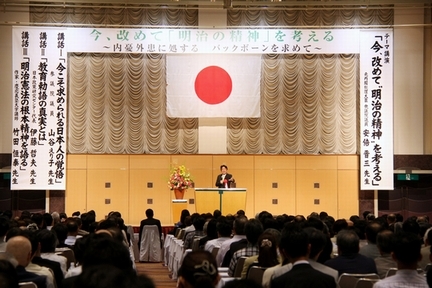
Abe Shinzo speaking at Nippon Kaigi event
“on the Meiji spirit,” 16 July 2012
Superb Japan!? ― 日本礼賛の幻想
 Recently there has been a boom in books and TV shows on a distinctive feature of contemporary Japan, to wit: lauding Japanese superiority.1 This type of immodest claims to superiority was popular in wartime, as the historian John W. Dower noted: “Poets, priests, and propagandists alike extolled the superiority of the ‘Yamato race’ and the sublime destiny of the Imperial Way.”2 A vivid historical example is an appendix to the monthly magazine Hinode (Sunrise) revealingly titled Here is Japan’s Greatness Shining in the World ― vaunting the world’s top military strength, indomitable spirit, etc.
This perspective gained great popularity in 1933, the very year Japan’s isolation became more pronounced when the country withdrew from the League of Nations due to international criticism in the wake of the Manchurian Incident.3 Akutagawa Prize winning author Tanabe Seiko articulates her discomfort with such peculiar self-glorification, which evokes memories of forced-fed propaganda about Japanese intelligence and might (e.g. high IQ and physical prowess as well as superior eye color) on the eve of World War II (Addendum).4 My question is simply: Where does this kind of parochial conceit or smugness come from? Is this one of “the signs society gives out cryptically”?5 What does this tell us about our society? I think it has something to do with the poverty of Japan’s democracy, however, looking elsewhere (cf. Aryan supremacy), there is reason to conclude that it is not limited to my native country.
Yet, if there is a distinctive feature, it is perhaps the lack of political breadth. Writing in Foreign Affairs (January/February, 2015), Nassim Nicholas Taleb and Gregory F. Treverton equate Japan’s “lack of political variability” with “long-term dominance by a single party” which they identify as a source of fragility.6 Taleb and Treverton address countries’ fragility as follows:
Contrary to conventional wisdom, genuinely stable countries experience moderate political changes, continually switching governments and reversing their political orientations. … It is political variability that makes democracies less fragile than autocracies.7